小行星、流星體、流星、和隕石如何區分?
小行星 Asteroid:
小行星是繞著太陽運行的小型岩石天體,通常位於火星和木星之間的「小行星帶」。這些天體雖然比行星小得多,但有時還是會對地球構成威脅。
An asteroid is a small rocky object that orbits the Sun, typically found in the “asteroid belt” between Mars and Jupiter. While much smaller than planets, they can sometimes threaten Earth.
流星體 Meteoroid:
流星體是指在太空中運行的小於小行星大於塵粒的岩石碎片。彗星會在其軌道上留下岩石碎片。當這些碎片進入地球大氣層而燃燒時,就成為流星。
A meteoroid is a space rock that is bigger than a dust grain but smaller than an asteroid. Comets leave debris in their orbit. When this debris enters Earth’s atmosphere and burns up, it becomes a meteor.
流星 Meteor (Falling Star, Shooting Star):
當小行星或流星體進入地球大氣層,並與空氣摩擦而燃燒,就稱為流星。較大的天體燃燒時非常明亮,稱為火流星。彗星在其軌道上的許多碎屑進入地球時會出現許多流星,稱為流星雨。
When an asteroid or meteoroid enters the Earth’s atmosphere and burns due to friction with the air, it is called a meteor. Larger objects burn very brightly and are called bolides or fireballs. Many meteors appear when debris from a comet in its orbit enters the Earth, called a meteor shower.
隕石 Meteorite:
當小行星或流星體進入地球大氣層並未燃燒殆盡,而落到地表,就稱為隕石。隕石可能是岩石或金屬。
A meteorite is a piece of a meteoroid or an asteroid that survives its passage through Earth’s atmosphere and lands on the Earth's surface. It can be made of rock or metal.
2024/09/06
2024/09/05
教學時機: 小行星撞地球
台北時間9月5日凌晨0點39分一公尺大小的小行星2024RW1,在菲律賓呂宋島東北部墜落。小行星因大氣摩擦而燃燒成明亮的火流星。
相關連結:
1. 圖引自Karen Bea在其臉書發布的的影片
2. 2024RW1撞擊前1.5小時的身影
3. 鹿林天文台記錄到小行星墜落時的閃光。
4. Boom! Small asteroid expected to hit Earth above the Phillipines, will burn up
參考資料:
1. 台北天文館天文新知:天文館團隊捕獲小行星撞擊地球前的最後身影!
台北時間9月5日凌晨0點39分一公尺大小的小行星2024RW1,在菲律賓呂宋島東北部墜落。小行星因大氣摩擦而燃燒成明亮的火流星。
相關連結:
1. 圖引自Karen Bea在其臉書發布的的影片
2. 2024RW1撞擊前1.5小時的身影
3. 鹿林天文台記錄到小行星墜落時的閃光。
4. Boom! Small asteroid expected to hit Earth above the Phillipines, will burn up
參考資料:
1. 台北天文館天文新知:天文館團隊捕獲小行星撞擊地球前的最後身影!
2024/07/25
教學時機: 發電功率與發電量--新聞報導的科學迷思概念
聯合報:<颱風凱米加持 風力發電破220萬瓩相當核三發電量>
物理老師嚎啕大哭中 😭😭😭😭😭!
也許明年會考應該拿來出題!
發電功率不是發電量!!! 風機的發電功率拿來和核三的發電量比,這樣比就像香蕉的數量比蘋果的價錢。
要比就要比同一段時間中的發電量!
220萬瓩是發電功率! 就像你家有11支20瓦的日光燈,你不能說你家耗電量220瓦! 如果把燈全打開一小時,這時的耗電量是220瓦-小時=0.22度電。
電功率乘以時間才是發電量!
參考資料:
1. 聯合報(2024,7月24日)。颱風凱米加持 風力發電破220萬瓩相當核三發電量,https://udn.com/news/story/7238/8116981?utm_source=facebook
2. 台灣科技媒體中心(2020)。能源名詞解釋,https://smctw.tw/4223/。
聯合報:<颱風凱米加持 風力發電破220萬瓩相當核三發電量>
物理老師嚎啕大哭中 😭😭😭😭😭!
也許明年會考應該拿來出題!
發電功率不是發電量!!! 風機的發電功率拿來和核三的發電量比,這樣比就像香蕉的數量比蘋果的價錢。
要比就要比同一段時間中的發電量!
220萬瓩是發電功率! 就像你家有11支20瓦的日光燈,你不能說你家耗電量220瓦! 如果把燈全打開一小時,這時的耗電量是220瓦-小時=0.22度電。
電功率乘以時間才是發電量!
參考資料:
1. 聯合報(2024,7月24日)。颱風凱米加持 風力發電破220萬瓩相當核三發電量,https://udn.com/news/story/7238/8116981?utm_source=facebook
2. 台灣科技媒體中心(2020)。能源名詞解釋,https://smctw.tw/4223/。
2011/12/06
教學時機:2011年12月10日月全食
(右圖為2007年8月27日月全食時的偏食)
2011年12月10日的月全食是很好的教學時機,觀測時間非常恰當,台灣月食時間預測如下:
半影食開始:19:31:54月球與地球半影第一次接觸,必須使用望遠鏡來觀測。
月偏食開始:20:45:24 月球與地球本影第一次接觸,肉眼可見月亮東邊變暗。
月全食開始:22:05:42 月球已完全進入地球本影中,肉眼可見月亮呈現紅色。
月全食結束:22:58:00 月球正要開始離開地球本影,肉眼可見月亮西邊生光。
本影食結束:00:18:18月球正好完全離開地球本影,肉眼可見月亮完全復圓。
半影食結束:01:31:42月球正好完全離開地球半影,必須使用望遠鏡來觀測。
錯過這次的月全食,下一次在台灣要能見到完整的月全食過程是在2018年的1月31日,而最近一次可以看到不完整的月全食(月出帶食)則是在2014年10月8日。
2011/12/10 月全食相關資料:
NASA預測資料:
http://eclipse.gsfc.nasa.gov/LEplot/LEplot2001/LE2011Dec10T.pdf
台北天文台完整資料:
http://tamweb.tam.gov.tw/bew/TW/content.asp?mtype=c9&idx=266
台北天文台月全食動畫與新聞資料下載:
http://tamweb.tam.gov.tw/bew/TW/content.asp?mtype=c9&idx=272
月全食成因動畫:
http://csep10.phys.utk.edu/astr161/lect/time/lunar_anim.html
http://www.teachersdomain.org/asset/psu10phy_vid_eclipser/
月全食教學海報下載:
http://tamweb.tam.gov.tw/bew/TW/content.asp?mtype=c9&idx=273
2011年12月10日的月全食是很好的教學時機,觀測時間非常恰當,台灣月食時間預測如下:
半影食開始:19:31:54月球與地球半影第一次接觸,必須使用望遠鏡來觀測。
月偏食開始:20:45:24 月球與地球本影第一次接觸,肉眼可見月亮東邊變暗。
月全食開始:22:05:42 月球已完全進入地球本影中,肉眼可見月亮呈現紅色。
月全食結束:22:58:00 月球正要開始離開地球本影,肉眼可見月亮西邊生光。
本影食結束:00:18:18月球正好完全離開地球本影,肉眼可見月亮完全復圓。
半影食結束:01:31:42月球正好完全離開地球半影,必須使用望遠鏡來觀測。
錯過這次的月全食,下一次在台灣要能見到完整的月全食過程是在2018年的1月31日,而最近一次可以看到不完整的月全食(月出帶食)則是在2014年10月8日。
2011/12/10 月全食相關資料:
NASA預測資料:
http://eclipse.gsfc.nasa.gov/LEplot/LEplot2001/LE2011Dec10T.pdf
台北天文台完整資料:
http://tamweb.tam.gov.tw/bew/TW/content.asp?mtype=c9&idx=266
台北天文台月全食動畫與新聞資料下載:
http://tamweb.tam.gov.tw/bew/TW/content.asp?mtype=c9&idx=272
月全食成因動畫:
http://csep10.phys.utk.edu/astr161/lect/time/lunar_anim.html
http://www.teachersdomain.org/asset/psu10phy_vid_eclipser/
月全食教學海報下載:
http://tamweb.tam.gov.tw/bew/TW/content.asp?mtype=c9&idx=273
2011/11/22
透鏡成像:免費模擬軟體--光學透鏡 (Optical Lenses)
一套好用的透鏡成像模擬軟體,最重要的是:它免費!
只要到下列網址下載:
http://download.cnet.com/Optical-Lenses/3000-2054_4-75416337.html?tag=mncol;7
然後按照指示安裝即可。操作時只要以滑鼠左鍵移動物體,則光線及像會跟著移動,很方便老師做解說。
老師可以用來教:
1.成像作圖;
2.歸納物距與像距、像的大小、和像的性質之間的關係。
你還想到可以教什麼嗎? 你想可以如何用在教學上?
不過要注意提醒學生,物體發出(反射)的光線不是只有那幾條,也不是只有那一點。
只要到下列網址下載:
http://download.cnet.com/Optical-Lenses/3000-2054_4-75416337.html?tag=mncol;7
然後按照指示安裝即可。操作時只要以滑鼠左鍵移動物體,則光線及像會跟著移動,很方便老師做解說。
老師可以用來教:
1.成像作圖;
2.歸納物距與像距、像的大小、和像的性質之間的關係。
你還想到可以教什麼嗎? 你想可以如何用在教學上?
不過要注意提醒學生,物體發出(反射)的光線不是只有那幾條,也不是只有那一點。
2011/07/20
通往宇宙之窗:美國地球科學教師協會提供的教學資源網站
美國地球科學教師協會(The National Earth Science Teachers Association, NESTA) 開放「通往宇宙之窗(Windows to the Universe)」新網站,提供K-12地球與太空科學教育者教學資源。
「通往宇宙之窗(Windows to the Universe)」網站包含9000頁以上的內容,以及上百個測試過的教學活動,可供教師隨時運用於教學。
美國教師學會(NSTA)也提供「變遷中的地球行星(Our Changing Planet」系列教學活動設計12單元,配合優美動人的「NBC學習(NBC Learn)」影片,是進行環境教育,探討環境及氣候變遷教學的寶庫。
- 通往宇宙之窗(Windows to the Universe)網址:
http://www.windows2universe.org/
- 變遷中的地球行星(Our Changing Planet)網址:
http://www.windows2universe.org/earth/changing_planet/changing_planet.html
2011/04/23
今日化學:分子結構、特性
Chemistry Now: Molecule Structure, Properties
美國科學基金會(NSF)、美國科學教師協會(NSTA)及美國國家廣播公司(NBC)合作,為化學年製作了一系列教學單元,名為「今日化學(Chemistry Now)」,每周推出一單元,預計製作31單元。內容涵蓋日常生活中的化學,包含了21世界的先進化學。以下是第三單元:「鏡」分子--香芹酮("Mirror" Molecule: Carvone)。
旁白:
"Mirror" Molecule: Carvone
Spearmint. Caraway. Dill.
A chewing gum flavor. A seed in rye bread. And an herb in pickles. Wouldnt seem they have anything in common, but they do. Reduce spearmint, caraway seed and dill to their essential oils and a sizable percentage of all three turn out to be made up of the same molecule: carvone.
How can you explain one molecule being responsible for distinctly different smells and tastes? With two hands, a mirror, a lightbulb and a pair of gloves.
Start with the basics: Carvones chemical formula tells you what its made of: 10 atoms of Carbon, 14 atoms of Hydrogen, and 1 atom of Oxygen. Just as important as how many atoms of what elements make up a molecule is how those atoms are bonded together and in what configuration, or structure.
We think of molecules, when and if we think of molecules, as having only one set structure. This is H2O, for example not this, or this. But a molecule like Carvone can have slightly different arrangements of their atoms and still be the same molecule like a girl who has different looks depending on how she parts her hair, or the way she wears a sweater. As long as how she rearranges her hair and clothes doesnt add or take away anything, shes still the same girl in the same outfit.
The carvone molecule has two slightly different looks or, as theyre called, stereoisomers: this one and this one. Stereoisomers are three-dimensional, but its easier to understand these two by looking at a standard two-dimensional drawing of their structures. Notice anything? The two are mirror images of each other. Some structures, like, say, a lightbulb, are the same in mirror image or side by side. But carvone stereoisomers are like a pair of hands: A hand and its mirror reflection will exactly match but hands arent the same side by side, or superimposed.
Actually, carvone stereoisomers are like left and right hands even down to their names: This one is R-carvone the R stands for the Latin word meaning right. The structure of this gives spearmint its taste and smell. Its mirror opposite is S-carvone the S stands for the Latin word meaning left. The way this one is arranged is what gives caraway its flavor and aroma and dill, too. In pure form, the two flavors are almost the same.
This kind of left-handed/right-handed molecule is called chiral. Carvone has chirality, terms, not coincidentally, from a Greek word meaning hand. The Greek word for nose is rhinous, yes, as in rhinocerous. which is the way well segue into this next part on how your nose and tongue work to distinguish the difference between the smells and tastes of spearmint or caraway or dill through specialized receptors that interact with molecules in very specific ways.
Think of some receptors as structured like baseball mitts specifically designed to pick up molecules with structures like baseballs but not footballs which have their own receivers. These receptors are so highly specialized that they interact distinctively with molecules that differ only in very small ways, like their handedness, almost as if some receptors are like right-handed gloves able to pick up only the R-carvone molecules, recognize them, and send a message to the brain saying Its spearmint!
And as if S-carvones only fit into left-handed glove receptors, who recognize them and tell the brain: Its caraway! or Its dill!
There you go: a handy explanation of carvone.
學習單
國中:Molecules, Isomers, and Our World
高中:Introduction to Enantiomers and Handedness
《上一單元:吉士堡化學--乳酪 ‖ 下一單元:化學鍵》
進一步參考資料
1. NBC Learn- Chemistry now
2. NSTA Blog
旁白:
"Mirror" Molecule: Carvone
Spearmint. Caraway. Dill.
A chewing gum flavor. A seed in rye bread. And an herb in pickles. Wouldnt seem they have anything in common, but they do. Reduce spearmint, caraway seed and dill to their essential oils and a sizable percentage of all three turn out to be made up of the same molecule: carvone.
How can you explain one molecule being responsible for distinctly different smells and tastes? With two hands, a mirror, a lightbulb and a pair of gloves.
Start with the basics: Carvones chemical formula tells you what its made of: 10 atoms of Carbon, 14 atoms of Hydrogen, and 1 atom of Oxygen. Just as important as how many atoms of what elements make up a molecule is how those atoms are bonded together and in what configuration, or structure.
We think of molecules, when and if we think of molecules, as having only one set structure. This is H2O, for example not this, or this. But a molecule like Carvone can have slightly different arrangements of their atoms and still be the same molecule like a girl who has different looks depending on how she parts her hair, or the way she wears a sweater. As long as how she rearranges her hair and clothes doesnt add or take away anything, shes still the same girl in the same outfit.
The carvone molecule has two slightly different looks or, as theyre called, stereoisomers: this one and this one. Stereoisomers are three-dimensional, but its easier to understand these two by looking at a standard two-dimensional drawing of their structures. Notice anything? The two are mirror images of each other. Some structures, like, say, a lightbulb, are the same in mirror image or side by side. But carvone stereoisomers are like a pair of hands: A hand and its mirror reflection will exactly match but hands arent the same side by side, or superimposed.
Actually, carvone stereoisomers are like left and right hands even down to their names: This one is R-carvone the R stands for the Latin word meaning right. The structure of this gives spearmint its taste and smell. Its mirror opposite is S-carvone the S stands for the Latin word meaning left. The way this one is arranged is what gives caraway its flavor and aroma and dill, too. In pure form, the two flavors are almost the same.
This kind of left-handed/right-handed molecule is called chiral. Carvone has chirality, terms, not coincidentally, from a Greek word meaning hand. The Greek word for nose is rhinous, yes, as in rhinocerous. which is the way well segue into this next part on how your nose and tongue work to distinguish the difference between the smells and tastes of spearmint or caraway or dill through specialized receptors that interact with molecules in very specific ways.
Think of some receptors as structured like baseball mitts specifically designed to pick up molecules with structures like baseballs but not footballs which have their own receivers. These receptors are so highly specialized that they interact distinctively with molecules that differ only in very small ways, like their handedness, almost as if some receptors are like right-handed gloves able to pick up only the R-carvone molecules, recognize them, and send a message to the brain saying Its spearmint!
And as if S-carvones only fit into left-handed glove receptors, who recognize them and tell the brain: Its caraway! or Its dill!
There you go: a handy explanation of carvone.
學習單
國中:Molecules, Isomers, and Our World
高中:Introduction to Enantiomers and Handedness
《上一單元:吉士堡化學--乳酪 ‖ 下一單元:化學鍵》
進一步參考資料
1. NBC Learn- Chemistry now
2. NSTA Blog
今日化學 :吉士堡化學—乳酪
Chemistry Now : Cheeseburger Chemistry—Cheese
美國科學基金會(NSF)、美國科學教師協會(NSTA)及美國國家廣播公司(NBC)合作,為化學年製作了一系列教學單元,名為「今日化學(Chemistry Now)」,每周推出一單元,預計製作31單元。內容涵蓋日常生活中的化學,包含了21世界的先進化學。以下是第二單元:吉士堡化學--乳酪(Chemistry of Cheeseburger--Cheeses)。
旁白:
The Chemistry of Cheese
AL ROKER, reporting:
You cant have a cheeseburger without it: cheese. Cheddar, Swiss, Mozzarella, Blue, Monterrey jack, Pepperjack. To keep the chemistry more basic, we wont deal here with whats called American or processed cheese.
Cheese is an ancient food, dating back some 4,000 years to when humans first domesticated goats, sheep, yaks and other mammals for meat and milk: the sole basic ingredient in cheese, then and today.
JULIE YU, The Exploratorium: Cheese is a very concentrated form of milk with the water removed.
ROKER: Turning milk into cheese involves a change in a substance from one common state of matter to another, in this case, from liquid to solid. Some of these changes can be physical those are changes that are reversible, like freezing water into a solid ice cube: it can melt into water again.
When a change involves a chemical reaction, it generally cant be reversed and turning liquid milk to solid cheese is a good example: the cheese can never go back to being milk again. Heres why:
YU: Were going to make the worlds simplest cheese.
ROKER: Julie Yu, a scientist at The Exploratorium in San Francisco whos funded by The National Science Foundation, starts with milk.
YU: Milk is composed of proteins, fats, sugars and water. The process of making cheese is somehow removing that water so that youre left with the concentrated mass of the proteins and fats.
ROKER: Thats not so easy. Milk is an emulsion: uncounted illions of globular protein molecules and droplets of fat are suspended in the liquid. How to separate those from the water, and concentrate them? Think of panning for gold. If the gold was in the form of tiny individual flecks, itd be impossible to pan out; itd just flow through any strainer with the water. The gold has to be in clumps, nuggets, to be sifted out. So how do you get the fats and proteins in liquid milk to form little nuggets so they can be separated from the water?
YU: Cheesemaking relies on changing the structure of the proteins that are in milk because in order to separate out the proteins from the water in our milk, we need to change their form.
ROKER: Its called denaturing, which is pretty much what it sounds like: changing the natural structure or qualities of something.
YU: Proteins are typically folded up in a three-dimensional structure. When theyre denatured, they relax into a long chain. And so those chains can tangle together and become enmeshed and they solidify in a way that you are able to strain them from the milk. In general, there are three ways to denature proteins: one is to introduce heat, one is to introduce high salt, and one is to introduce acid.
ROKER: Like the citric acid in lemon juice.
YU: Were going to use lemon juice today. The proteins are normally in tight little balls. The acid is going to relax them. And theyre going to coagulate, theyre going to stick together in this nice gooey mess. And were going to strain that out and that will give us the cheese.
Im going to pour this through a strainer that I have lined with some cheesecloth. And thats going to keep the solids behind, which we now call the curds. And the liquid, which we would call the whey, is going into this bowl.
ROKER: Yes, curds and whey, what Little Miss Muffet was eating, as she sat on whatever a tuffet is, before unexpected arachnid proximity prompted flight.
YU: Once we strain out all of the whey it firms up into this nice ball of fresh cheese. There are some fresh cheeses that are made this way, just by simply adding acid. But the majority of cheeses are made in another way. They use a bacteria and an enzyme in order to coagulate their proteins.
ROKER: An enzyme called rennet, which cheesemakers can buy in tablet form.
YU: Rennet is an enzyme thats actually in the stomach lining of most animals. Its made to digest milk proteins. Rennet further breaks down the proteins and creates this nice gooey mesh and gives you cheeses of different textures.
ROKER: Rennet may explain how those ancient ancestors of ours made the first cheese.
YU: Its possible that someone had a pouch made out of animal stomach and was holding milk inside of that. Any enzymes present in the stomach would break down the milk and when they poured out their milk they would have been surprised to find curds and whey.
ROKER: Today cheeses come in a global array - at least 670 different kinds are listed in a leading cheese database. Chemistry is the reason all those different textures and flavors develop during cheese processing and aging: fermentation, oxidation, dehydration, bacterial and mold growth. Theyre all chemical reactions. So, there you are: a basic explanation of the chemical processes that turn liquid milk into solid cheese and turn a hamburger into a cheeseburger.
學習單
國中:Blowing up balloons with yeast
高中:Kitchen Mystery
《上一單元:水的化學 ‖ 下一單元:分子結構》
進一步參考資料
1. NBC Learn- Chemistry now
2. NSTA Blog
旁白:
The Chemistry of Cheese
AL ROKER, reporting:
You cant have a cheeseburger without it: cheese. Cheddar, Swiss, Mozzarella, Blue, Monterrey jack, Pepperjack. To keep the chemistry more basic, we wont deal here with whats called American or processed cheese.
Cheese is an ancient food, dating back some 4,000 years to when humans first domesticated goats, sheep, yaks and other mammals for meat and milk: the sole basic ingredient in cheese, then and today.
JULIE YU, The Exploratorium: Cheese is a very concentrated form of milk with the water removed.
ROKER: Turning milk into cheese involves a change in a substance from one common state of matter to another, in this case, from liquid to solid. Some of these changes can be physical those are changes that are reversible, like freezing water into a solid ice cube: it can melt into water again.
When a change involves a chemical reaction, it generally cant be reversed and turning liquid milk to solid cheese is a good example: the cheese can never go back to being milk again. Heres why:
YU: Were going to make the worlds simplest cheese.
ROKER: Julie Yu, a scientist at The Exploratorium in San Francisco whos funded by The National Science Foundation, starts with milk.
YU: Milk is composed of proteins, fats, sugars and water. The process of making cheese is somehow removing that water so that youre left with the concentrated mass of the proteins and fats.
ROKER: Thats not so easy. Milk is an emulsion: uncounted illions of globular protein molecules and droplets of fat are suspended in the liquid. How to separate those from the water, and concentrate them? Think of panning for gold. If the gold was in the form of tiny individual flecks, itd be impossible to pan out; itd just flow through any strainer with the water. The gold has to be in clumps, nuggets, to be sifted out. So how do you get the fats and proteins in liquid milk to form little nuggets so they can be separated from the water?
YU: Cheesemaking relies on changing the structure of the proteins that are in milk because in order to separate out the proteins from the water in our milk, we need to change their form.
ROKER: Its called denaturing, which is pretty much what it sounds like: changing the natural structure or qualities of something.
YU: Proteins are typically folded up in a three-dimensional structure. When theyre denatured, they relax into a long chain. And so those chains can tangle together and become enmeshed and they solidify in a way that you are able to strain them from the milk. In general, there are three ways to denature proteins: one is to introduce heat, one is to introduce high salt, and one is to introduce acid.
ROKER: Like the citric acid in lemon juice.
YU: Were going to use lemon juice today. The proteins are normally in tight little balls. The acid is going to relax them. And theyre going to coagulate, theyre going to stick together in this nice gooey mess. And were going to strain that out and that will give us the cheese.
Im going to pour this through a strainer that I have lined with some cheesecloth. And thats going to keep the solids behind, which we now call the curds. And the liquid, which we would call the whey, is going into this bowl.
ROKER: Yes, curds and whey, what Little Miss Muffet was eating, as she sat on whatever a tuffet is, before unexpected arachnid proximity prompted flight.
YU: Once we strain out all of the whey it firms up into this nice ball of fresh cheese. There are some fresh cheeses that are made this way, just by simply adding acid. But the majority of cheeses are made in another way. They use a bacteria and an enzyme in order to coagulate their proteins.
ROKER: An enzyme called rennet, which cheesemakers can buy in tablet form.
YU: Rennet is an enzyme thats actually in the stomach lining of most animals. Its made to digest milk proteins. Rennet further breaks down the proteins and creates this nice gooey mesh and gives you cheeses of different textures.
ROKER: Rennet may explain how those ancient ancestors of ours made the first cheese.
YU: Its possible that someone had a pouch made out of animal stomach and was holding milk inside of that. Any enzymes present in the stomach would break down the milk and when they poured out their milk they would have been surprised to find curds and whey.
ROKER: Today cheeses come in a global array - at least 670 different kinds are listed in a leading cheese database. Chemistry is the reason all those different textures and flavors develop during cheese processing and aging: fermentation, oxidation, dehydration, bacterial and mold growth. Theyre all chemical reactions. So, there you are: a basic explanation of the chemical processes that turn liquid milk into solid cheese and turn a hamburger into a cheeseburger.
學習單
國中:Blowing up balloons with yeast
高中:Kitchen Mystery
《上一單元:水的化學 ‖ 下一單元:分子結構》
進一步參考資料
1. NBC Learn- Chemistry now
2. NSTA Blog
今日化學 :水的化學
Chemistry Now : Chemistry of Water
美國科學基金會(NSF)、美國科學教師協會(NSTA)及美國國家廣播公司(NBC)合作,為化學年製作了一系列教學單元,名為「今日化學(Chemistry Now)」,每周推出一單元,預計製作31單元。內容涵蓋日常生活中的化學,包含了21世界的先進化學。以下是第一單元:水的化學(Chemistry of Water)。
旁白:
Chemistry Now: Molecule Profile: H20 - Water
It might just be the most universally known fact in chemistry: the chemical formula for water - H2O.
A model of H2O doesnt look like much two small atoms of Hydrogen, the H2 part of H2O, attached to one bigger atom of Oxygen, the O part of H2O. Kind of like a cartoon drawing of a teddy bear and actually, water is kind of funny.
Fun Facts: Water H2O is the only natural substance on Earth found in all three common states of matter: liquid, solid, and gas, or vapor.
Its also one of the only common substances that is less dense in solid form than in liquid form. And water can dissolve more substances than any other liquid.
Lets focus on H2O in liquid form: What gives water its remarkable qualities and abilities?
Its all in the molecules content and structure not just what each H2O molecule is made of, but how the atoms are positioned, in what configuration and shape, and how they are bound together.
In water, just so youll know for later, the Hs and O are held together by covalent bonds by sharing electrons.
H2O is a polar molecule: The same way our planet has North and South Poles on opposite sides, the H2O molecule has two poles on opposite sides. And like a magnet, H2O has one positive end and one negative end.
Thinking of that cartoon teddy bear again, the chin side of the Oxygen atom has a slight negative electrical charge; the opposite side the side with the two Hydrogen ears has a slight positive electrical charge.
This might just be the second most universally known bit of chemistry: opposites attract. The positive Hydrogen side of every H2O molecule is going to attract, and be attracted to, the negative Oxygen sides of other nearby H2O molecules, in all directions. More and more of them pull closer and closer together until theyre like people in a hot, crowded dance club, packed so close together they can hardly move, but still turning and moving wildly.
Molecules that stay close to each other are called cohesive and water is highly cohesive. A pentillion even hextillion of chaotically-moving, tightly-packed H2O molecules cohere to make a single raindrop.
As good as water molecules are at all this cohering and convening, they also form bonds with surfaces and molecules unlike themselves a force called adhesion, as in adhesive. Pour the water out of a glass, and the inside of the glass is still wet: some H2O molecules stick or adhere to the silica molecules in the glass.
Being cohesive and adhesive is what makes water a (near) universal solvent. How? Take salt, or sodium chloride sodium ions, abbreviated as Na-plus, and chloride ions, abbreviated as Cl-minus, in a crystal.
As soon as a salt crystal hits the water, its rushed by a molecular mob of H2O molecules that break it apart; separate the sodium and chloride ions kind of a chemical divide and conquer.
Because sodium ions have a positive charge, each one is swarmed by H2O molecules flying at it with their negatively-charged Oxygen sides, completely surrounding the sodium ion, isolating it, carrying it off in a turbulent sea of H2O molecules.
The same thing happens in reverse to the chloride ions, which have a negative charge each of those is surrounded and isolated by H2O molecules leading with their positively-charged hydrogen sides.
Each salt crystal is broken into tiny pieces dissolved by, and into, the water.
Theres much, much more to know about H2O and how it works to keep every living thing on the planet and maybe other planets alive.
Think of this video as a drop in the bucket.
學習單
國中:Density Comparison of Water and Ice
高中:Water is a Polar Molecule
‖ 下一單元:吉士堡化學--乳酪》
進一步參考資料:
1. NBC Learn- Chemistry now
2. NSTA Blog
旁白:
Chemistry Now: Molecule Profile: H20 - Water
It might just be the most universally known fact in chemistry: the chemical formula for water - H2O.
A model of H2O doesnt look like much two small atoms of Hydrogen, the H2 part of H2O, attached to one bigger atom of Oxygen, the O part of H2O. Kind of like a cartoon drawing of a teddy bear and actually, water is kind of funny.
Fun Facts: Water H2O is the only natural substance on Earth found in all three common states of matter: liquid, solid, and gas, or vapor.
Its also one of the only common substances that is less dense in solid form than in liquid form. And water can dissolve more substances than any other liquid.
Lets focus on H2O in liquid form: What gives water its remarkable qualities and abilities?
Its all in the molecules content and structure not just what each H2O molecule is made of, but how the atoms are positioned, in what configuration and shape, and how they are bound together.
In water, just so youll know for later, the Hs and O are held together by covalent bonds by sharing electrons.
H2O is a polar molecule: The same way our planet has North and South Poles on opposite sides, the H2O molecule has two poles on opposite sides. And like a magnet, H2O has one positive end and one negative end.
Thinking of that cartoon teddy bear again, the chin side of the Oxygen atom has a slight negative electrical charge; the opposite side the side with the two Hydrogen ears has a slight positive electrical charge.
This might just be the second most universally known bit of chemistry: opposites attract. The positive Hydrogen side of every H2O molecule is going to attract, and be attracted to, the negative Oxygen sides of other nearby H2O molecules, in all directions. More and more of them pull closer and closer together until theyre like people in a hot, crowded dance club, packed so close together they can hardly move, but still turning and moving wildly.
Molecules that stay close to each other are called cohesive and water is highly cohesive. A pentillion even hextillion of chaotically-moving, tightly-packed H2O molecules cohere to make a single raindrop.
As good as water molecules are at all this cohering and convening, they also form bonds with surfaces and molecules unlike themselves a force called adhesion, as in adhesive. Pour the water out of a glass, and the inside of the glass is still wet: some H2O molecules stick or adhere to the silica molecules in the glass.
Being cohesive and adhesive is what makes water a (near) universal solvent. How? Take salt, or sodium chloride sodium ions, abbreviated as Na-plus, and chloride ions, abbreviated as Cl-minus, in a crystal.
As soon as a salt crystal hits the water, its rushed by a molecular mob of H2O molecules that break it apart; separate the sodium and chloride ions kind of a chemical divide and conquer.
Because sodium ions have a positive charge, each one is swarmed by H2O molecules flying at it with their negatively-charged Oxygen sides, completely surrounding the sodium ion, isolating it, carrying it off in a turbulent sea of H2O molecules.
The same thing happens in reverse to the chloride ions, which have a negative charge each of those is surrounded and isolated by H2O molecules leading with their positively-charged hydrogen sides.
Each salt crystal is broken into tiny pieces dissolved by, and into, the water.
Theres much, much more to know about H2O and how it works to keep every living thing on the planet and maybe other planets alive.
Think of this video as a drop in the bucket.
學習單
國中:Density Comparison of Water and Ice
高中:Water is a Polar Molecule
‖ 下一單元:吉士堡化學--乳酪》
進一步參考資料:
1. NBC Learn- Chemistry now
2. NSTA Blog
2011/03/28
教學時機:為何311日本大地震使地球自轉輕微變快?
日本地震提供了一個教學機會,NASA的太空數學Space Math就提供了一些題目,可供教師教學運用。
新聞報導中一直強調地震使得地球自轉變快,太空數學就運用簡單的物理模式,讓學生探索日本地震使地球自轉變快1.8微秒的原理。教師可運用在角動量守恆的教學上。
以下是題目(The 2011 Japan Earthquake Rocks the Earth)的中文翻譯。
根據在加州的美國太空總署噴射推進實驗室的地球物理學家Richard Gross的計算,2011年3月11日的日本地震導致地球自轉變快約1.8微秒(0.0000018秒)。這看來很小,但是在今日高科技的世界裡,時間通常以十億分之一秒計,這就是非常巨大的改變!
導致地球自轉變快的原因類似於旋轉的溜冰者在旋轉時縮回她的手臂。手臂的質量越靠近她的旋轉軸會導致她旋轉越快以維持角動量的守恆。
地震可能移動質量,像日本島,使其稍微靠近地球中心,因此地球旋轉變快以維持角動量守恆。日本移動了將近4公尺,這顯著地改變了物質在地殼(就像溜冰者的手)的分布方式。這是怎麼發生的? 底下是一個簡單的模型。
問題1 — 球體的角動量公式如下:
如果質量M不變,角動量J也不變,哪一個公式可以用來表示最初的半徑r和角速度ω對最後的半徑和角速度的比較?
問題2 — 如果地球在整整24小時,以半徑6378.00km轉了2π的角度,在它內縮1.00公里後,最後的角速度變為多少rad/s?
問題3 — 地球自轉週期的差為多少秒?
當然,日本地震的地殼移動型式比本問題更為複雜,但是基本原理一樣。
相關文章及資料:
新聞報導中一直強調地震使得地球自轉變快,太空數學就運用簡單的物理模式,讓學生探索日本地震使地球自轉變快1.8微秒的原理。教師可運用在角動量守恆的教學上。
以下是題目(The 2011 Japan Earthquake Rocks the Earth)的中文翻譯。
2011日本地震撼動地球
根據在加州的美國太空總署噴射推進實驗室的地球物理學家Richard Gross的計算,2011年3月11日的日本地震導致地球自轉變快約1.8微秒(0.0000018秒)。這看來很小,但是在今日高科技的世界裡,時間通常以十億分之一秒計,這就是非常巨大的改變!
導致地球自轉變快的原因類似於旋轉的溜冰者在旋轉時縮回她的手臂。手臂的質量越靠近她的旋轉軸會導致她旋轉越快以維持角動量的守恆。
冬季奧運花式溜冰的角動量守恆
地震可能移動質量,像日本島,使其稍微靠近地球中心,因此地球旋轉變快以維持角動量守恆。日本移動了將近4公尺,這顯著地改變了物質在地殼(就像溜冰者的手)的分布方式。這是怎麼發生的? 底下是一個簡單的模型。
問題1 — 球體的角動量公式如下:
如果質量M不變,角動量J也不變,哪一個公式可以用來表示最初的半徑r和角速度ω對最後的半徑和角速度的比較?
問題2 — 如果地球在整整24小時,以半徑6378.00km轉了2π的角度,在它內縮1.00公里後,最後的角速度變為多少rad/s?
問題3 — 地球自轉週期的差為多少秒?
當然,日本地震的地殼移動型式比本問題更為複雜,但是基本原理一樣。
相關文章及資料:
- 大地震帶來大迷思! 大地震會造成地球自轉軸偏移嗎?
- 冬季奧運花式溜冰的角動量守恆(教學活動設計,評量)
- 本問題PDF檔及參考答案(英文,中文)
2011/03/22
美國化學學會提供免費教學資源
美國化學學會(The American Chemical Society, ACS)建立一個教學資源網站,提供以活動為基礎的中學化學教學設計。教學單元含蓋中學化學的所有主要概念,並配有動畫或影片。網址如下:
http://www.middleschoolchemistry.com/
大地震帶來大迷思! 大地震會造成地球自轉軸偏移嗎?
以下摘自中國時報的報導:
日本「地理網」(Geonet)蒐集的資料顯示,三月十一日的東日本大地震,導致日本海岸向東位移最多達四公尺,並導致地軸偏移約十六.五公分,從而稍微加快地球自轉的速度,地球一天的長度也將因此縮短一百八十萬分之一秒(這應該是翻譯錯誤,應該是1.8微秒,即1.8百萬分之一秒,或百萬分之1.8秒)。(中國時報, 2011-03-16)
這個地軸是指地球自轉軸嗎?
許多新聞報導都直指地球自轉軸! 在網路上以「地球自轉軸偏移」做關鍵字搜尋,可以搜尋到二萬則左右的資料。甚至也有學者據此推論「希望地球的自轉軸別偏太多了,雖然磁軸已偏太多了。地上有海嘯,但希望地下的"岩漿嘯"別震盪太大,一旦自轉軸偏太大,可能要改變公轉軌道了,這"代誌"就大了!」有醬恐怖嗎?
但是根據物理定律(角動量守恆):轉動的物體如果沒有外來的力(嚴格來說,應該說沒有外力矩)作用,轉動(或轉動軸)的狀態就不會改變,亦即角動量的大小和方向維持不變。所以這裡的地軸變動不應該是地球自轉軸指向太空的方向變動! 如果真是這個變動,那就真的代誌大條,物理定律要改寫了!
底下摘錄自聯合報記者在智利大地震後訪問台大地質學系洪教授的報導:
「地軸偏移」、「自轉變快」,究竟稀不稀奇?台灣大學地質科學系副教授洪淑蕙指出,這並不算很「炫」的事,因為平常的風能和潮汐,造成地球每天延長或縮短的時間,就超過智利地震的影響千倍以上。更何況「1.26微秒」根本沒人感覺得出來。
洪淑蕙解釋,所謂「地球自轉」可想像地球繞著穿過質心的一條假想軸-「質心軸」轉動,智利地震的成因是納斯卡板塊隱沒於南美洲板塊,讓整個球體的質量分布稍微改變,所以造成質心和質心軸些許移動。
至於地球轉動變快,是因為智利地震與「板塊隱沒」有關,可以想像成納斯卡板塊略為「往裡縮」,讓地球整體的轉動慣量變小。但是,地震算是地球自身的「內力」作用,沒有外力干擾,根據角動量守恆定律,地球的角速度變大,轉得快了一些。(聯合報, 2010-4-5)
這樣看來聯合報的報導裡,地軸指的是「質心軸」。問題是:質心軸是否和自轉軸重疊?
美國太空總署(NASA)的地球物理學家Richard Gross這樣說:
The Earth rotates around its rotation axis, but its mass is balanced about a different axis, the figure axis. Because these axes are different, the Earth wobbles as it rotates.(Beitler, 2010, 摘錄自NASA網頁)
地球繞著它的自轉軸旋轉,但是它的質量卻是對另一個不同的軸--質心軸(註1)平衡。因為這兩個軸不同,所以地球自轉時會晃動。
也就是說,地球像中心未對準轉軸而鎖歪了的偏心汽車輪子,當輪子轉動時會有晃動現象。
我們再來看看美國太空總署(NASA)的新聞稿怎麼說?
The calculations also show the Japan quake should have shifted the position of Earth's figure axis (the axis about which Earth's mass is balanced) by about 17 centimeters (6.5 inches), towards 133 degrees east longitude. Earth's figure axis should not be confused with its north-south axis; they are offset by about 10 meters (about 33 feet). This shift in Earth's figure axis will cause Earth to wobble a bit differently as it rotates, but it will not cause a shift of Earth's axis in space—only external forces such as the gravitational attraction of the sun, moon and planets can do that.(NASA, 2011-3-14)
計算同時顯示,日本地震應該已經使得地球質心軸(地球質量對此軸平衡)的位置向東經133度偏移了大約17公分。地球質心軸不應該和地球南北軸(即地球在太空中的自轉軸,註2)混淆,兩者大約相距10公尺。這次地球質心軸的偏移將使得地球自轉時的晃動(註3)和以往有一點點不同,但是它不會造成太空中的地軸變動(指自轉軸指向的變動)——只有外力(如太陽、月亮或行星的萬有引力)才能造成這種變動。
原來地球指向天球的自轉軸並沒有變動,偏移的是質心軸。大地震改變了地球的質量分佈,所以造成質心軸變動,就像汽車輪子撞到大坑洞,結果輪子變了形,它的質心移了位置。但是地震不是外來的力,所以自轉軸相對於天球沒有變動。
謝天謝地! 物理定律終究不用改寫!
這個誤會(註4)讓我們學到以下幾點:
- 報紙或網路上的資訊不能完全相信,所以我們必須學會並教學生如何分析、判斷及解讀資訊的可信程度。
- 不只是學生會有迷思概念,其實每個人都有迷思概念,即使是學者專家,在他非專長的領域,也和普通人一樣具有迷思概念。所以,我們應該學習尊重真正具有該領域專長的專家學者意見,而不是輕易相信所謂專家學者的意見,也許這些專家學者的專長並不在此。
- 如果提供的資訊越充足,產生迷思的可能性就越低,因此報紙不應該刪除前面所引用NASA新聞稿的那一段。老師的教學也是。如果洪淑蕙教授能再提一下,或記者能夠追問,真實地球的質心軸和南北自轉軸是否不同,那麼產生迷思的機會可能會降低。
- 我們終於知道「地軸(Earth's axis)」這兩個字有可能指質心軸(figure axis)或南北軸(north-south axis)。附帶一提,這裡的南北是指自轉軸上的南北,不是磁針所指的地磁南北,這兩者也是不同的。
- 高中老師在以後講解角動量守恆時,可以舉「大地震可能造成地球自轉變快(因地球內縮,轉動慣量變小,而角動量必須守恆,所以轉動變快),但不會造成相對於天球的自轉軸方向變動(因無外力作用,所以無外力矩作用,故地球相對於天球的自轉軸不會改變)」這個活生生的例子。
註1:
figure axis, 直譯是形狀軸,意譯也許也可以翻譯成平衡軸,本文根據台大洪教授的用詞,將其翻譯為質心軸。
註2:
Space.com根據NASA地球物理學家Richard Gross對日本地震對地球影響的研究報導中,對南北軸(north-south axis)及質心軸(figure axis)的解釋如下:
The Earth's figure axis is not the same as its north-south axis in space, which it spins around once every day at a speed of about 1,000 mph (1,674 kph). The figure axis is the axis around which the Earth's mass is balanced and the north-south axis by about 33 feet (10 meters).(Space.com, 2011-3-13)
地球的質心軸和它在太空中的南北軸不同。地球每天以大約每小時1000英哩(1674公里/小時)的速率繞南北軸一次。質心軸是指地球質量對其平衡的軸,在南北軸旁邊約33英呎(10公尺)。
註3:
如果對地球自轉的晃動現象(錢德勒晃動Chandler Wobble)有興趣,可參考下列網頁:
http://en.wikipedia.org/wiki/Chandler_wobble
http://nasadaacs.eos.nasa.gov/articles/2010/2010_gps.html
註4:
地球自轉軸在太空中沒有變動,晃動的是質心軸;相對來說,我們可以看到自轉軸的極點在地球上移動,叫做polar motion(極移)。大地震發生後,實際是質心軸極輕微偏移,相對而言,我們看到地球自轉軸在地球上的相對位置有極輕微偏移,所以實際上有物理性質變動的不是自轉軸,而是質心軸。
| 2000-2009年地球自轉軸的極點在地球上移動 |
2011/01/12
2011國際化學年
2011是國際化學年(International Year of Chemistry 2011),一整年將舉辦許多精采的活動,並提供豐富的教學資源。
相關網頁如下:
IYC2011 官方網站:
http://www.chemistry2011.org/
IYC2011 台灣官方網站:
http://iyc2011.tku.edu.tw/
相關資源:
The Periodic Table of Videos
除提供週期表118個元素的118部影片外,還有分子影片、化學之旅及其他影片。影片為英語發音,可選擇顯示英文字幕。
http://www.periodicvideos.com/
魔幻化境Magichem
提供有趣的化學知識及實驗影片,以及台灣的化學年活動資訊。
http://case.ntu.edu.tw/magichem/blog/
2010/09/10
太空數學在NASA(Space Math @ NASA)

您的學生是否厭煩那些老掉牙的數學或科學題目?
您是否為尋找新鮮的數學或科學題目傷腦筋?
您是否在煩惱如何給資優的學生一些挑戰性的題目?
如果你對上述問題的回答是YES! 那麼,你一定要拜訪這個網站--Space Math @ NASA(太空數學在NASA)!
Space Math @ NASA是一個很棒的教學資源網站,它已經有七年的歷史,累積了非常多的教學資源,並且為了方便老師們下載運用,輯結成了好幾本PDF檔的電子書,供大家免費下載。
網站所以稱為太空數學,是因為一開始它提供了一些有關太空科學的數學題目,供老師們配合數學課運用,這些題目均經過教師志工實際教學試用後才推出,因此可用性極高,普受老師及學生們歡迎,從2004年到今年(2010)八月,下載的PDF檔已經多達二百萬份。
其實所謂的太空數學,並不是純粹的數學題目,而是可以應用來解有關太空問題的數學,所以它不只是可以運用在數學課,也可以運用在其他科學與工程等科目,例如物理的電磁學,地科有關的天文、太空氣象,甚至遙測、黑洞等,內容五花八門,生動有趣,而且題目無以數計,含蓋的年級小學到高中,你可以好好挑選適合你的學科、你的學生的題目。
唯一的缺憾是題目是英文,你必須經過適當的翻譯。目前已經有芬蘭語、德語、義大利語、波斯語、俄語、西班牙語、瑞典語、土耳其語。也許您可以自願擔任中文翻譯志工。
太空數學還配合太空任務和新聞時事出題,例如哈伯發現具有類似彗尾的超熱行星,太空數學就依據發現的資料,出了一組題目,這樣的題目很有挑戰性與趣味性,可以讓學生實際運用數學來解真正的問題,體會到數學解題並不是只為考試!
除了上述,網站還提供多媒體及遊戲。
Space Math @ NASA(太空數學在NASA)的網址如下:
http://spacemath.gsfc.nasa.gov/SpaceMath.html
2010/09/09
918,大家來賞月! 全球賞月之夜
秋天賞月要變成全球的事了!
NASA發起全球賞月夜(International Observe the Moon Might, InOMN),今年(2010)是第一年,就訂在九月18日。當然不是我們的中秋節。只是最接近Harvest Moon之前的星期六。
Harvest是收穫季節,我們說春耕夏耘秋收冬藏,那麼Harvest Moon就是秋天的滿月囉,那可不可以翻成中秋月?
當然不可以! Harvest Moone一定是滿月,它指的是最接近秋分的滿月,今年秋分在九月23日,而滿月(望)也在九月23日,所以Harvest Moon 是23日晚上的月亮。
而中秋節訂在農曆的八月15日,農曆的15日不一定是滿月,像這個月的滿月就在農曆16日。所以中秋月在九月22日,Harvest Moon在九月23日,Harvest Moon不是中秋月。
不過無論如何,賞月總是好事,而且全球一起賞,哇! 想想全球的人千里共嬋娟,under the same moonlight,多麼令人感動!
當然NASA不會提倡大家一起烤肉這種對環境不太友善的賞月活動,全球賞月活動是要大家在九月18日一起走出戶外看看我們的月亮,你可以使用望遠鏡,也可以只用肉眼。
當然有許多老少咸宜的配套活動,例如月亮攝影比賽,學生可以選擇月球任務的理想地點,也可看看月球偵查衛星(Lunar Reconnaissance Orbiter, LRO)為你拍攝的照片,當然包含從來不面向我們的那一面。
更棒的是NASA提供了探索月球的活動教材,可以做為老師們教學的參考。
全球賞月之夜
人:任何人。
事:賞月、拍攝月亮、學習及探索月球科學。
時:2010年九月18日。
地:走到自家戶外,或參加當地學校或社團(例如天文學會)辦理的活動。
物:月亮
重要的相關網址如下:
全球賞月夜活動網頁
http://observethemoonnight.org/
探索月球(Exploring the Moon)活動教材
http://ares.jsc.nasa.gov/education/Activities/ExpMoon/ExpMoon.htm
全球賞月夜資料下載
http://observethemoonnight.org/downloads/
月球教學資源
http://www.lpi.usra.edu/education/resources/s_system/moon.shtml
虛擬月球免費軟體下載
http://ap-i.net/avl/en/download
中文版
http://ncu.dl.sourceforge.net/project/virtualmoon/2-%20translation/old%20up%20to%20V4.0/avllangCN.exe
Google月球
http://www.google.com/moon/
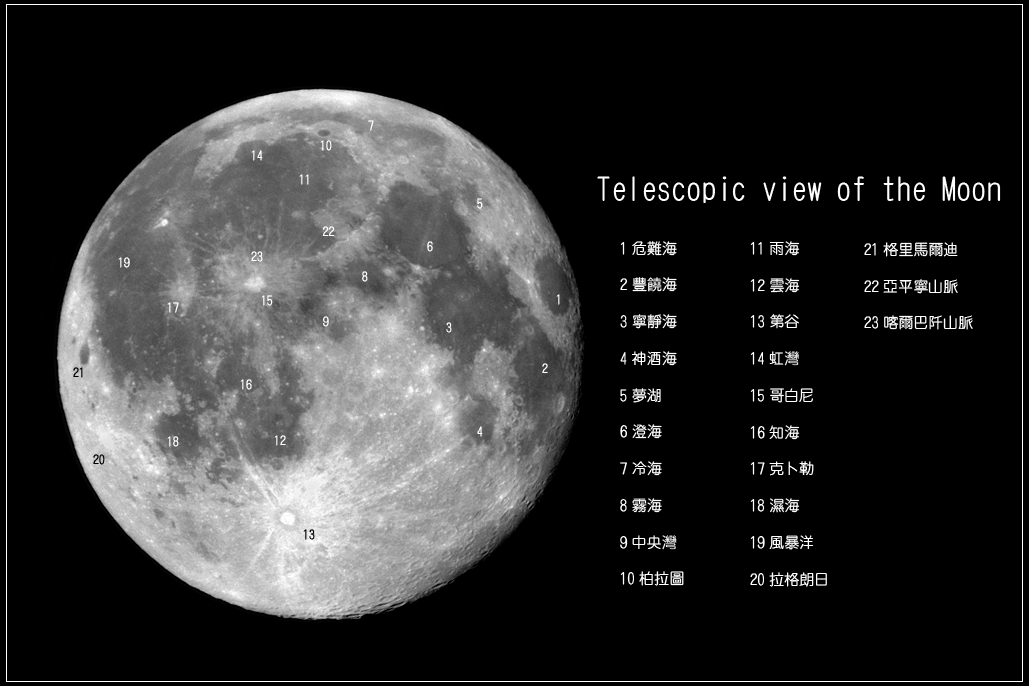
賞月月球簡圖
英文地名
http://observethemoonnight.org/downloads/moonmapIOMN_v2.2.pdf
中文地名
http://farm3.static.flickr.com/2573/3973773532_64bd54e9fd_o.jpg
月相觀察紀錄表
http://observethemoonnight.org/downloads/MoonObservationJournal.pdf
八月星空(中文)
http://www.google.com.tw/search?rlz=1C1CHMG_zh-TWTW291TW303&aq=f&sourceid=chrome&ie=UTF-8&q=%E5%85%AB%E6%9C%88%E6%98%9F%E7%A9%BA
NASA影片:八月星空--月亮(含英文旁白稿)
http://tytc.blogspot.com/2010/09/whats-up-for-september-2010-moon.html
英文版星象盤(含僅九月18日當晚適用之星象、月亮及行星)
http://www.lpi.usra.edu/observethemoonnight/downloads/starchart_northernhemisphere_alt4web.pdf
月地統計資料簡報(English)
http://www.lpi.usra.edu/education/powerpoints/earth_moon_statistics.ppt
月相與月食簡報(English)
http://www.lpi.usra.edu/education/powerpoints/phases_eclipses.ppt
2010/04/30
你所必須知道的「能」
我國正在推動節能減碳政策,而節能減碳要能落實,教育是最不可或缺,也是最重要的一環。
如果你正在為能源教育尋找資料,這裡有一個由美國國家學術研究院提供的網站,資料相當豐富完整。雖然有些資料是針對美國,但是仍然值得參考。網站分成能源的使用、來源、代價及效率,網址如下:
首頁:
http://needtoknow.nas.edu/energy/
能源的使用:
http://needtoknow.nas.edu/energy/energy-use/
能源的來源:
http://needtoknow.nas.edu/energy/energy-sources/
能源的代價:
http://needtoknow.nas.edu/energy/energy-costs/
能源的效率:
http://needtoknow.nas.edu/energy/energy-efficiency/
如果你正在為能源教育尋找資料,這裡有一個由美國國家學術研究院提供的網站,資料相當豐富完整。雖然有些資料是針對美國,但是仍然值得參考。網站分成能源的使用、來源、代價及效率,網址如下:
首頁:
http://needtoknow.nas.edu/energy/
能源的使用:
http://needtoknow.nas.edu/energy/energy-use/
能源的來源:
http://needtoknow.nas.edu/energy/energy-sources/
能源的代價:
http://needtoknow.nas.edu/energy/energy-costs/
能源的效率:
http://needtoknow.nas.edu/energy/energy-efficiency/
2010/02/27
看獵戶關心光污染
這裡有一個很有意義的、簡單的全球性活動,希望老師及家長帶領學生參加!
第五屆夜間地球(Globe at Night)活動: 2010年3月3-16日
人:每一個人。
事:觀察夜晚星空的獵戶星座。
時:當地晚上8-10點(2010年3月3-16日)。
地:你的所在地,可以抬頭看到夜空的地方。
物:不用任何觀測儀器,只要你的雙眼。
緣起:
全球有一半的人口居住在都市,許多都市人從未,也許永遠不會,體驗到美麗的星空。這個遺憾起因於「光污染」。它牽涉的層面很廣,包括安全、節能、成本、健康、以及對野生生物的影響,當然還有觀星!
雖然光污染是嚴重而且還在持續成長的全球性問題,但是它是最容易解決,而且在地區層級就能解決的環境議題。
目的:
喚起大眾對光污染的重視與關心。
如何做:
1. 找出你的經緯度(可以使用GPS或利用Google Earth)
2. 在晚上八點到十點到戶外,抬頭尋找獵戶座(Orion)。星圖:
http://www.globeatnight.org/images/20N_bw.jpg
http://www.globeatnight.org/observe_finder_20N.html
你可以事先在網路上練習找出獵戶座:
http://www.globeatnight.org/learn_findorion20N.html
3. 核對星等圖。網址如下:
http://www.globeatnight.org/observe_magnitude.html
4. 報告你的觀察結果。網址如下:
http://www.globeatnight.org/report.html
5. 和全世界數千個觀察結果做比較。
活動主網頁:
http://www.globeatnight.org/index.html
其他相關活動資料:
星空的招喚(Dark Skies Awareness)
http://www.darkskiesawareness.org/DarkSkiesRangers/
第五屆夜間地球(Globe at Night)活動: 2010年3月3-16日
人:每一個人。
事:觀察夜晚星空的獵戶星座。
時:當地晚上8-10點(2010年3月3-16日)。
地:你的所在地,可以抬頭看到夜空的地方。
物:不用任何觀測儀器,只要你的雙眼。
緣起:
全球有一半的人口居住在都市,許多都市人從未,也許永遠不會,體驗到美麗的星空。這個遺憾起因於「光污染」。它牽涉的層面很廣,包括安全、節能、成本、健康、以及對野生生物的影響,當然還有觀星!
雖然光污染是嚴重而且還在持續成長的全球性問題,但是它是最容易解決,而且在地區層級就能解決的環境議題。
目的:
喚起大眾對光污染的重視與關心。
如何做:
1. 找出你的經緯度(可以使用GPS或利用Google Earth)
2. 在晚上八點到十點到戶外,抬頭尋找獵戶座(Orion)。星圖:
http://www.globeatnight.org/images/20N_bw.jpg
http://www.globeatnight.org/observe_finder_20N.html
你可以事先在網路上練習找出獵戶座:
http://www.globeatnight.org/learn_findorion20N.html
3. 核對星等圖。網址如下:
http://www.globeatnight.org/observe_magnitude.html
4. 報告你的觀察結果。網址如下:
http://www.globeatnight.org/report.html
5. 和全世界數千個觀察結果做比較。
活動主網頁:
http://www.globeatnight.org/index.html
其他相關活動資料:
星空的招喚(Dark Skies Awareness)
http://www.darkskiesawareness.org/DarkSkiesRangers/
2010/02/18
看冬季奧運學科學
美國國家廣播公司(NBC)和國家科學基金會(NSF)合作推出了一套16部科學教育影片—「冬季奧運的科學」。每部影片大約4-5分鐘,可以下載供教室教學,而且均提供課程計畫,包括有趣的教室活動、學習單及評量題目。
影片網址:
http://www.nsf.gov/news/special_reports/olympics/index.jsp
課程計畫網址:
http://lessonopoly.org/svef/?q=node/9086
2010/02/17
看賽車教力學
您知道嗎?
如果不能正確運用科學原理,你不可能贏得NASCAR全美房車大賽,因為NASCAR根本就是車輪上的科學實驗!
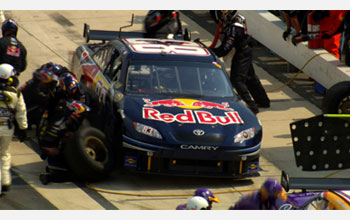
美國科學基金會(NSF)委託一位致力於科學普及化的德州大學物理教授Diandra Leslie-Pelecky主持發展了一套”極速的科學”影片。觀眾可以學會科學如何使賽車更有power、而且更敏銳、快速、並且更安全。
網站網址如下:
http://www.nsf.gov/news/special_reports/sos/
如果不能正確運用科學原理,你不可能贏得NASCAR全美房車大賽,因為NASCAR根本就是車輪上的科學實驗!
美國科學基金會(NSF)委託一位致力於科學普及化的德州大學物理教授Diandra Leslie-Pelecky主持發展了一套”極速的科學”影片。觀眾可以學會科學如何使賽車更有power、而且更敏銳、快速、並且更安全。
網站網址如下:
http://www.nsf.gov/news/special_reports/sos/
2009/12/05
2010年太空站月曆下載
2000年人類首度在太空中建立了繞地球運轉的低軌道太空站,轉眼就要邁入第十年了,太空站的規模已非昔日,而且已經變成了國際合作的太空研究計畫了。
您知道太空站怎麼組合起來的嗎?
來趟太空站之旅吧!
美國太空總署(NASA)為了太空站十周年慶,推出了2010年太空站月曆,除了擁有從太空站拍攝的照片外,還有NASA的歷史里程碑,以及1998年以來國際太空站計畫的有趣事件。月曆上還標示了每月的新月、上弦、滿月及下弦發生日期,以及春分、夏至、秋分及冬至。首頁還有一張太空站年表。
您可以彩色列印作為教室環境佈置。
做一個太空站模型:
教案下載(含黑白紙模型,適合4-8年級)
彩色太空站紙模型下載 / 製作說明下載 / 原始網頁
您知道太空站怎麼組合起來的嗎?
來趟太空站之旅吧!
美國太空總署(NASA)為了太空站十周年慶,推出了2010年太空站月曆,除了擁有從太空站拍攝的照片外,還有NASA的歷史里程碑,以及1998年以來國際太空站計畫的有趣事件。月曆上還標示了每月的新月、上弦、滿月及下弦發生日期,以及春分、夏至、秋分及冬至。首頁還有一張太空站年表。
您可以彩色列印作為教室環境佈置。
做一個太空站模型:
教案下載(含黑白紙模型,適合4-8年級)
訂閱:
文章 (Atom)